
- Home
- Blog
- Egypt Travel Guide & Blog – Explore Egypt’s Top Attractions & Inspiring Travel Tips
- Ramses II: Discover the Life, Legacy, and Monuments of Egypt’s Greatest Pharaoh
- On 24 Dec 2025
- In Egypt Travel Guide & Blog – Explore Egypt’s Top Attractions & Inspiring Travel Tips
- Tags
Few figures in human history have left a legacy as powerful, enduring, and visually breathtaking as Ramses II. Known for his monumental building projects, military campaigns, and exceptionally long reign, Ramses II shaped ancient Egypt in ways that still influence our understanding of the ancient world today. His statues tower over landscapes, his temples dominate horizons, and his name continues to echo through time as a symbol of strength, vision, and divine kingship.
Often called Ramses the Great, he ruled Egypt for an extraordinary 66 years during the 19th Dynasty of the New Kingdom (circa 1279–1213 BCE). During this period, Egypt reached a height of power, wealth, and artistic achievement that made Ramses II one of the most celebrated rulers in all of antiquity.
In this guide, we explore who Ramses II truly was, why his monuments still amaze modern travelers, and what makes his legacy so central to Egypt’s history — from colossal statues and royal temples to fascinating historical facts and unforgettable archaeological sites.
Who Was Ramses II?
Ramses II ascended the throne as a young man and quickly demonstrated that he intended to rule not only as a king, but as a living legend. He inherited a stable kingdom from his father, Seti I, and expanded Egypt’s influence through diplomacy, warfare, and monumental construction.
Unlike many pharaohs whose reputations faded over time, Ramses II carefully shaped how he would be remembered. He placed his name and image everywhere — on temples, statues, obelisks, and inscriptions — ensuring that future generations would know who he was.
His reign combined political intelligence, military strength, religious devotion, and architectural ambition, making Ramses II not just a ruler, but a master of legacy.
Ramses II and the Art of Power
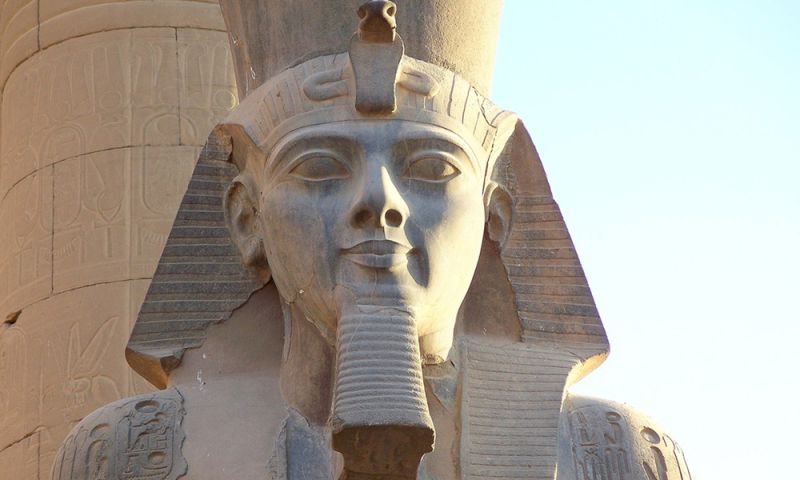
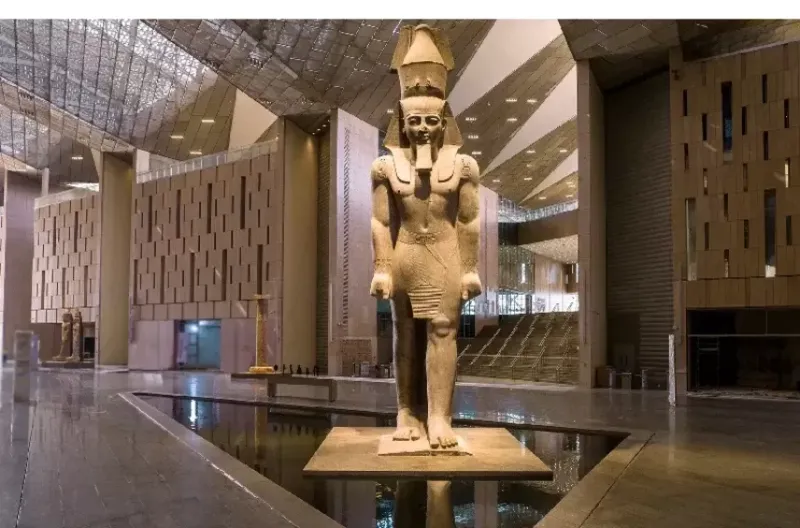
One of the defining traits of Ramses II was how he used art and architecture to project authority. Colossal statues of him appear across Egypt, carved in stone at a scale meant to impress both humans and gods.
The famous King Ramses II statue, found in multiple locations such as Memphis and Luxor, portrays him as eternally youthful, divine, and invincible. These statues were not merely decorative — they were political and spiritual tools designed to reinforce the idea that Ramses II ruled by divine right.
This artistic strategy worked remarkably well. Thousands of years later, people still recognize Ramses II by name, face, and form.
The Abu Simbel Temples: Ramses II’s Masterpiece
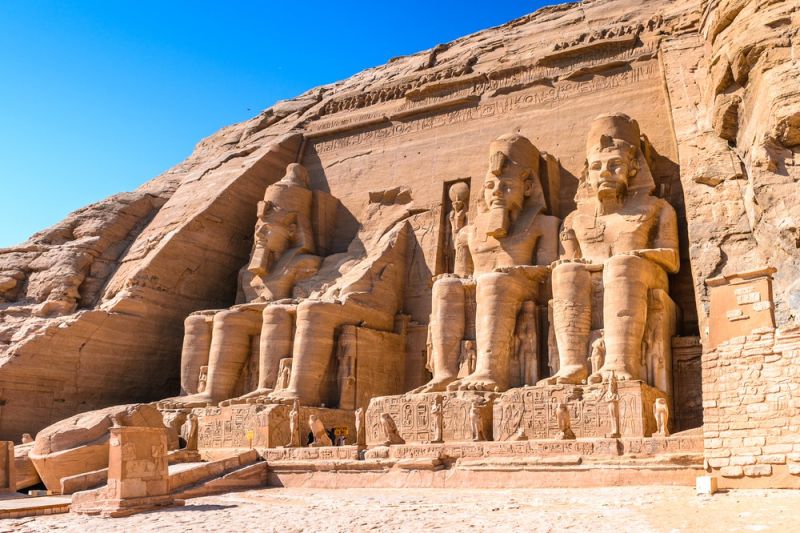
Among all his achievements, nothing represents Ramses II more powerfully than the Ramses II Abu Simbel temple complex in southern Egypt.
Carved directly into a mountainside near the Nubian border, the Great Temple of Abu Simbel features four colossal seated statues of Ramses II, each over 20 meters tall. These statues gaze outward across the desert, symbolizing his eternal guardianship over Egypt’s southern frontier.
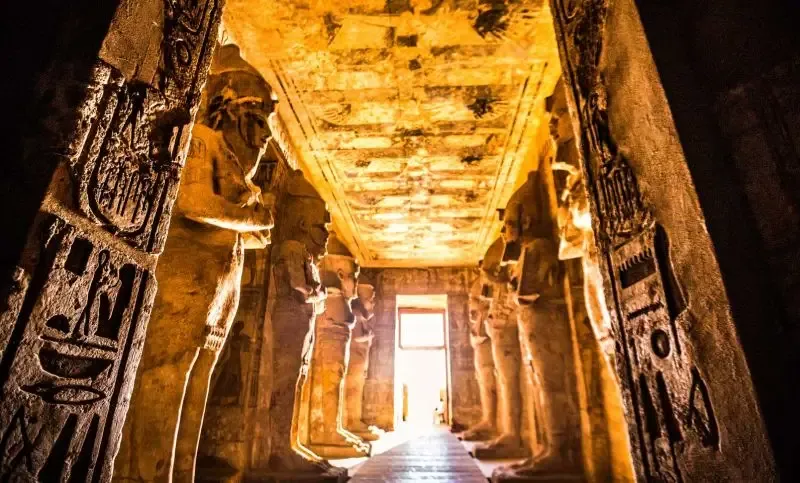
Inside the temple, walls are covered with reliefs showing Ramses II defeating enemies, offering gifts to the gods, and celebrating divine favor. Twice each year, sunlight penetrates the inner sanctuary and illuminates statues of the gods — including Ramses II himself — a breathtaking alignment of engineering, astronomy, and religious symbolism.
This temple alone makes Ramses II one of the most architecturally influential rulers in world history.
Ramses the Great as a Warrior and Diplomat
Ramses II was not only a builder but also a warrior king. His most famous military event was the Battle of Kadesh against the Hittites, one of the largest chariot battles ever recorded.
While the battle itself was militarily inconclusive, Ramses II turned it into a propaganda triumph. Temple walls depict him as the sole hero defeating countless enemies, reinforcing his divine image. Later, he signed one of the world’s first recorded peace treaties with the Hittites — a remarkable act of early diplomacy that stabilized the region for years.
This combination of strength and negotiation helped Ramses the Great secure Egypt’s borders and maintain internal prosperity.
Ramses II as a Family Man
Another fascinating aspect of Ramses II is his enormous royal family. He fathered over 100 children and had multiple queens, including his beloved wife Nefertari, whose tomb in the Valley of the Queens is one of the most beautifully decorated in Egypt.
Ramses II lived into his 90s — an astonishing age for the ancient world — and outlived many of his sons, eventually being succeeded by his 13th son, Merneptah.
His long life and massive family allowed him to shape multiple generations of Egypt’s political and religious life.
Ramses 2 Facts That Still Amaze Historians
Here are some remarkable Ramses 2 facts that show just how extraordinary he was:
-
He ruled for 66 years — one of the longest reigns in Egyptian history.
-
He built more monuments than any other pharaoh.
-
He declared himself a god during his lifetime, not only after death.
-
His mummified body was discovered in remarkable condition and is now preserved in Cairo.
-
His peace treaty with the Hittites is displayed today at the United Nations as a symbol of early international diplomacy.
Each of these facts contributes to the unmatched reputation of Ramses II.
Why Travelers Are Drawn to Ramses II Today
Modern travelers are fascinated by Ramses II not just because of his power, but because of how visible his legacy remains. You can still walk into his temples, stand beneath his statues, and read inscriptions carved over 3,000 years ago.
Sites connected to Ramses II — Abu Simbel, Luxor, Karnak, Memphis — are among the most visited in Egypt. His presence is everywhere, and experiencing it firsthand creates a powerful emotional connection between the ancient world and the modern traveler.
Why Ramses II Still Matters
More than any other pharaoh, Ramses II represents the height of ancient Egyptian civilization. His reign combined stability, creativity, strength, and spiritual authority in a way few leaders in history ever achieved.
He is remembered not because historians wrote about him, but because he built himself into the landscape of Egypt itself.
To study Ramses II is to understand Egypt at its most powerful — and to witness how one man used vision, ambition, and artistry to become immortal.
Conclusion: Experience the World of Ramses II
Whether you are a history enthusiast, a cultural traveler, or someone seeking a deeper connection to humanity’s past, exploring the world of Ramses II is unforgettable. His monuments are not just stone and relief — they are stories carved into the earth.
From the towering statues to the sunlit temples of Abu Simbel, the legacy of Ramses II invites you to step into a world where kings became gods and history became eternal.
What Our Travelers Say
Real reviews from our travelers
Sarah W. – United Kingdom
Booking with Spirits Travel was the best decision we made. The itinerary was well-balanced, the accommodations were excellent, and the support team was always available. Egypt exceeded our expectations, and the service was outstanding
Michael T. – United States
Spirits Travel made our trip to Egypt smooth and stress-free. From the moment we landed, everything was perfectly organized. The guides were knowledgeable, friendly, and always on time. We felt safe and well taken care of throughout the journey.
Daniel R. – Canada
We wanted a customized experience, and Spirits Travel delivered exactly that. Every detail was handled professionally, and communication was clear from start to finish. Highly recommended for anyone visiting Egypt for the first time.

Emily K. – Australia
I was a bit nervous before traveling, but Spirits Travel completely put me at ease. Everything ran smoothly, and the local team was incredibly helpful. It was an unforgettable experience, and I would absolutely travel with them again.