
- Home
- Blog
- Egypt Travel Guide & Blog – Explore Egypt’s Top Attractions & Inspiring Travel Tips
- Abu Simbel Temple: A Complete Guide to Egypt’s Most Powerful Monument
- On 19 Dec 2025
- In Egypt Travel Guide & Blog – Explore Egypt’s Top Attractions & Inspiring Travel Tips
- Tags
Few landmarks on Earth inspire awe quite like the Abu Simbel Temple. Rising dramatically from the southern desert of Egypt near Lake Nasser, this colossal rock-cut masterpiece is more than an ancient monument—it is a symbol of power, devotion, engineering genius, and timeless human ambition.
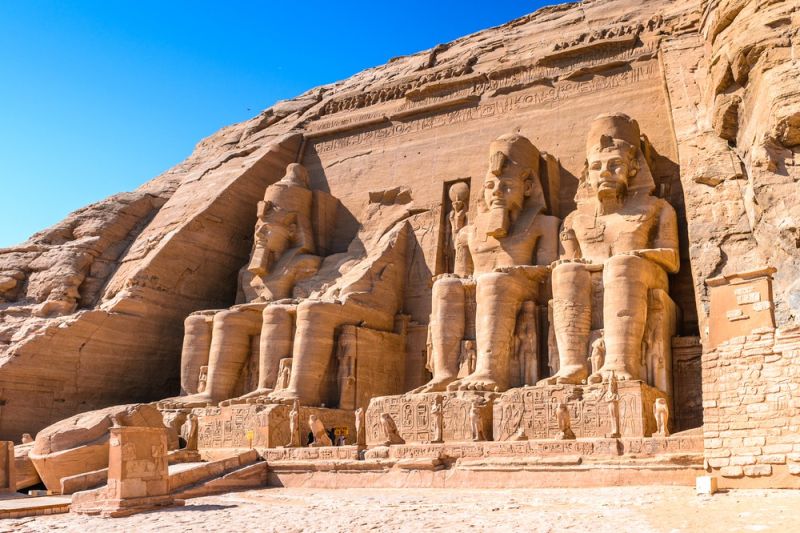
Carved into a sandstone mountain over 3,000 years ago, the Abu Simbel Temple stands today as one of the most extraordinary achievements of ancient Egypt. Travelers who journey here don’t simply visit a historic site; they experience a living legacy that continues to shape Egypt’s cultural identity and captivate visitors from around the world.
Whether you are passionate about ancient history, fascinated by monumental architecture, or searching for unforgettable experiences beyond the usual tourist trail, the Abu Simbel Temple deserves a top place on your Egypt itinerary.
The Historical Significance of Abu Simbel Temple
Commissioned by Pharaoh Ramses II during the 13th century BCE, the Abu Simbel Temple was designed to project royal authority, divine legitimacy, and Egypt’s dominance over Nubia. Ramses II ruled for over six decades, and his ambition to immortalize his reign is nowhere more evident than in this monumental complex.
The temples were not built randomly. Their strategic location near Egypt’s southern frontier was a political statement—a warning to potential enemies and a celebration of Egypt’s power. Today, the site remains one of the most compelling examples of how architecture, religion, and politics were seamlessly united in ancient Egyptian civilization.
When standing before the massive statues guarding the Abu Simbel Temple, visitors can immediately sense the authority Ramses II intended to convey across millennia.
Architecture That Defies Time
The Abu Simbel Temple complex consists of two rock-cut temples:
The Great Temple of Ramses II
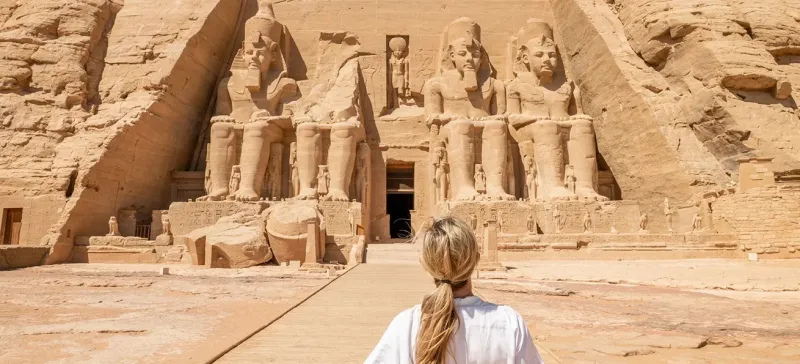
Dominated by four colossal seated statues of Ramses II, each standing over 65 feet tall, the Great Temple is an architectural marvel carved directly into solid rock. The temple façade alone is enough to leave visitors speechless.
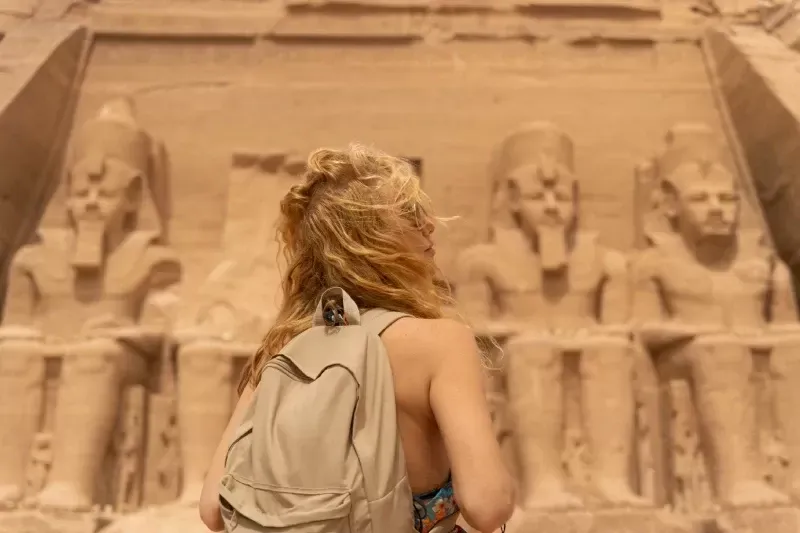
Inside, the halls are lined with towering pillars depicting Ramses II as a god-king, equal to Egypt’s deities. The walls are adorned with vivid reliefs portraying military victories, ceremonial processions, and religious rituals—stories frozen in stone for eternity.
The Small Temple of Nefertari
Dedicated to Queen Nefertari and the goddess Hathor, the smaller temple is equally remarkable. Rarely in ancient Egypt was a queen honored on the same monumental scale as a pharaoh. Here, statues of Nefertari stand shoulder-to-shoulder with Ramses II, reflecting her exceptional status.
Together, these structures elevate the Abu Simbel Temple from an archaeological site to a masterpiece of artistic and cultural expression.
The Solar Alignment Phenomenon
One of the most astonishing abu simbel facts is the solar alignment that occurs twice each year. On February 22 and October 22, the rising sun penetrates the Great Temple and illuminates the inner sanctuary—casting light on the statues of Ramses II and the gods Amun and Ra-Horakhty, while leaving Ptah, the god of darkness, in shadow.
This phenomenon demonstrates the advanced astronomical knowledge of ancient Egyptian architects. Even after the temple’s relocation in the 20th century, the alignment was preserved with remarkable precision—an engineering triumph that continues to amaze scholars and travelers alike.
Witnessing this event is a once-in-a-lifetime experience and one of the most compelling reasons to visit the Abu Simbel Temple.
Ramses II and Abu Simbel Temple: A Legacy in Stone
The story of Ramses II Abu Simbel Temple is inseparable from the pharaoh himself. Ramses II ruled Egypt during one of its most prosperous periods, and Abu Simbel served as his eternal monument.
Reliefs inside the temple depict scenes from the Battle of Kadesh, where Ramses portrayed himself as a heroic warrior and supreme leader. While historians debate the battle’s outcome, the temple’s imagery leaves no doubt about how Ramses wanted to be remembered.
By blending divine symbolism with historical narrative, the Abu Simbel Temple became a tool of propaganda, faith, and legacy—one that still commands admiration thousands of years later.
The Incredible Rescue of Abu Simbel
Another remarkable chapter in the story of the Abu Simbel Temple unfolded in the 1960s. The construction of the Aswan High Dam threatened to submerge the temples beneath the rising waters of Lake Nasser.
In one of history’s most ambitious preservation efforts, UNESCO led an international campaign to save the temples. The entire complex was carefully dismantled, cut into massive blocks, and reassembled on higher ground—an operation that took years and required extraordinary precision.
Thanks to this global effort, the Abu Simbel Temple remains accessible today, standing as a powerful reminder of humanity’s shared responsibility to protect cultural heritage.
Things to Do in Abu Simbel
Visiting the Abu Simbel Temple offers more than sightseeing—it’s an immersive journey into ancient history. Here are the top things to do in Abu Simbel:
Explore the Interior Chambers
Step inside the Great Temple and admire the detailed carvings, towering pillars, and sacred sanctuary that once hosted religious rituals.
Visit the Temple of Nefertari
Discover one of ancient Egypt’s most beautiful tributes to royal love and feminine power.
Attend the Sun Festival
Plan your visit during the solar alignment dates to witness one of archaeology’s greatest wonders.
Enjoy Lake Nasser Views
The surrounding landscape adds a dramatic backdrop to the temples, offering stunning photo opportunities.
Join a Guided Tour
An expert guide brings the history of the Abu Simbel Temple to life, offering insights that transform your visit into a meaningful experience.
Best Time to Visit Abu Simbel Temple
The best time to visit the Abu Simbel Temple is between October and April, when temperatures are more comfortable. Early morning visits are ideal for avoiding crowds and experiencing the temple in soft, golden light.
For travelers seeking a truly unforgettable experience, visiting during the Sun Festival dates provides an extraordinary blend of science, spirituality, and ancient artistry.
How to Get to Abu Simbel
Most visitors reach the Abu Simbel Temple via flights from Aswan or Cairo, or through organized tours that include transportation and expert guidance. Despite its remote location, the journey is well worth the effort, rewarding travelers with one of the most awe-inspiring sights in Egypt.
Why Abu Simbel Temple Belongs on Your Bucket List
The Abu Simbel Temple is not simply a monument—it is a testament to human ingenuity, devotion, and ambition. From its colossal statues to its astronomical precision, every detail tells a story of power, belief, and artistic mastery.
For travelers seeking authentic, meaningful, and unforgettable experiences, Abu Simbel delivers on every level. It is a place where history feels alive, where ancient voices still echo through stone, and where visitors leave with a deeper appreciation for humanity’s shared past.
If you’re planning a journey to Egypt, make the Abu Simbel Temple a priority—you won’t just visit history, you’ll feel it.
What Our Travelers Say
Real reviews from our travelers
Sarah W. – United Kingdom
Booking with Spirits Travel was the best decision we made. The itinerary was well-balanced, the accommodations were excellent, and the support team was always available. Egypt exceeded our expectations, and the service was outstanding
Michael T. – United States
Spirits Travel made our trip to Egypt smooth and stress-free. From the moment we landed, everything was perfectly organized. The guides were knowledgeable, friendly, and always on time. We felt safe and well taken care of throughout the journey.
Daniel R. – Canada
We wanted a customized experience, and Spirits Travel delivered exactly that. Every detail was handled professionally, and communication was clear from start to finish. Highly recommended for anyone visiting Egypt for the first time.

Emily K. – Australia
I was a bit nervous before traveling, but Spirits Travel completely put me at ease. Everything ran smoothly, and the local team was incredibly helpful. It was an unforgettable experience, and I would absolutely travel with them again.